Sailing to Byzantium

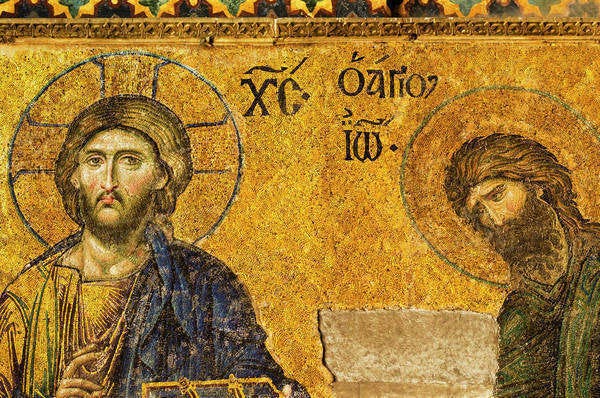
Deisis, Mosaic in the Hagia Sophia, Istanbul

I must admit, I am drawn to Byzantium, to the ancient cities and culture of Eastern Christianity. In some circles it is common to describe anything useless or helplessly complex as “Byzantine”. This is just as preposterous as the French thinkers calling themselves the promoters of the Enlightenment in contrast to those thoughtful theologians and philosophers from the supposed “Dark Ages” upon whose shoulders they stood.

Eastern Christianity often suffers at the hands of Western ignorance. Many people summarize Eastern Christianity as Roman Catholicism without a pope. The truth is, Eastern Christianity is a fount of theology, spirituality, art, and music that comes to our aid in these pressing times.
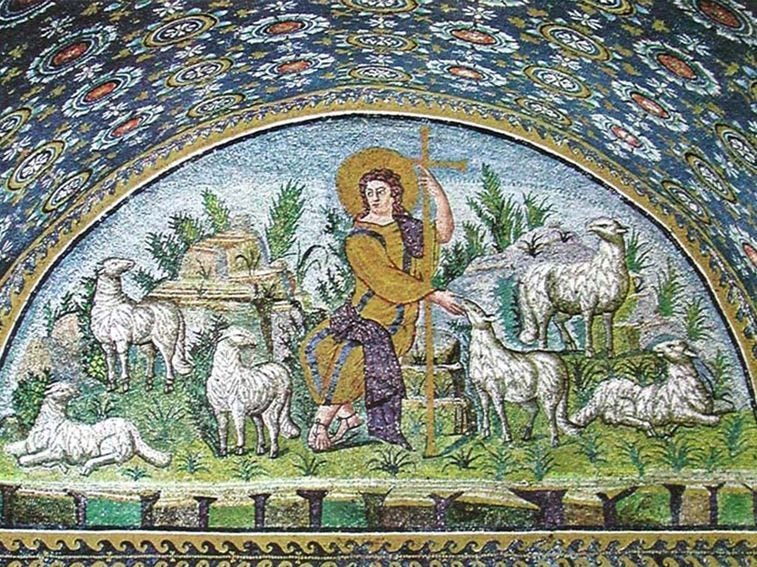
Jesus, the Good Shepherd, Ravenna, Italy

In our liquid modernity and postmodern churches, we do not have two feet to stand on. We act as if every institution and church tradition must be undone in order to be free. However, the faithful witness of Christians in the East tell us another story. It is not easy to be a Christian today in the post-Christian West yet it has rarely been easy to be a Christian in the East.

While Christians in the West may prefer to seek refuge in the early church and in later Western expressions of Christianity (i.e. the European Reformation), the East today provides traditions and theological undrestandings that can anchor our communities and keep our spiritualities free from self-help, egocentric, consumeristic, and degenerate forms of the Gospel.

May William Butler Yeats’ poem, “Sailing to Byzantium” inspire us to return to the ancient cities of the Orient in order to discover not ruins, but the living faith and tradition of Eastern Christianity and its vibrant spirituality.

Sailing to Byzantium

by William Butler Yeats

I

That is no country for old men. The young

In one another’s arms, birds in the trees,

— Those dying generations — at their song,

The salmon-falls, the mackerel-crowded seas,

Fish, flesh, or fowl, commend all summer long

Whatever is begotten, born, and dies.

Caught in that sensual music all neglect

Monuments of unageing intellect.

II

An aged man is but a paltry thing,

A tattered coat upon a stick, unless

Soul clap its hands and sing, and louder sing

For every tatter in its mortal dress,

Nor is there singing school but studying

Monuments of its own magnificence;

And therefore I have sailed the seas and come

To the holy city of Byzantium.

III

O sages standing in God’s holy fire

As in the gold mosaic of a wall,

Come from the holy fire, perne in a gyre,

And be the singing-masters of my soul.

Consume my heart away; sick with desire

And fastened to a dying animal

It knows not what it is; and gather me

Into the artifice of eternity.

IV

Once out of nature I shall never take

My bodily form from any natural thing,

But such a form as Grecian goldsmiths make

Of hammered gold and gold enamelling

To keep a drowsy Emperor awake;

Or set upon a golden bough to sing

To lords and ladies of Byzantium

Of what is past, or passing, or to come.

W. B. Yeats, “Sailing to Byzantium” from The Poems of W. B. Yeats: A New Edition, edited by Richard J. Finneran. Copyright 1933 by Macmillan Publishing Company, renewed © 1961 by Georgie Yeats.

Meet Pablo Alaguibe

Pablo Alguibe is the first poet we have translated and published for our online and on-demand print journal, Hagioscope. We have published three of his poems:

The Inside of a Whale

Holes in wool socks

The rotund man and the presumably young man

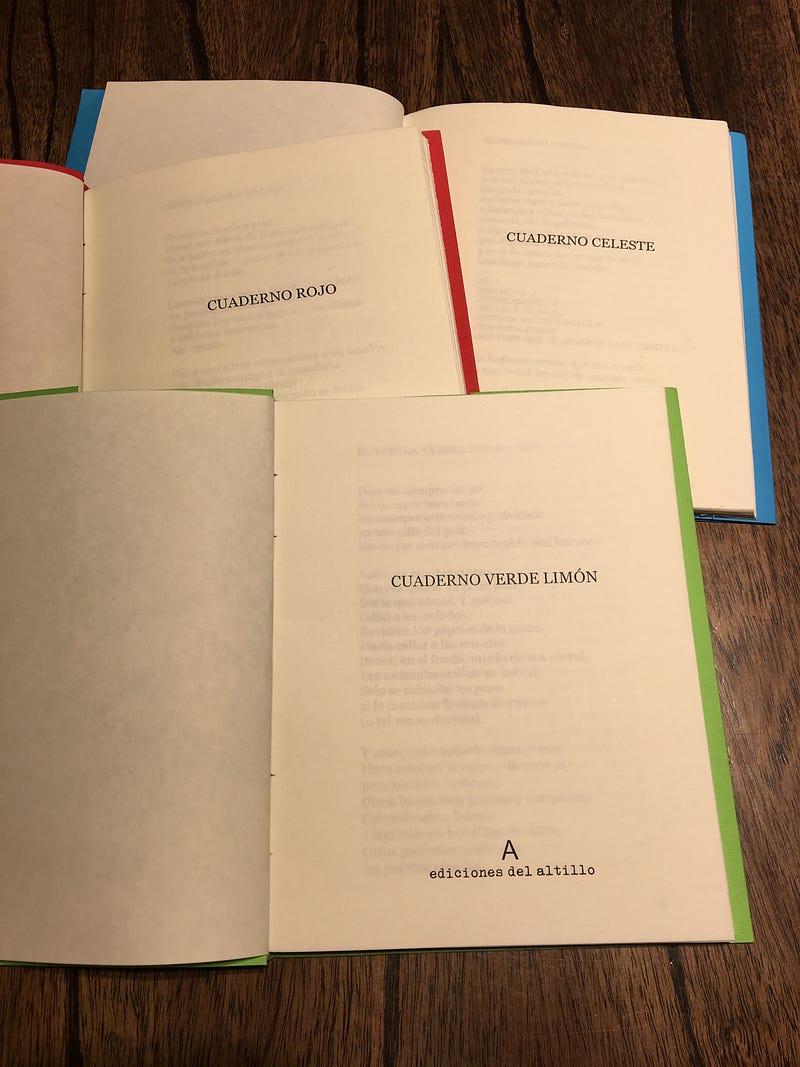
Pablo Alaguibe created Ediciones del Altillo in Mar del Plata, Argentina

I first met Pablo in a coffee shop in Vicente López, Buenos Aires this last year. He had been in a very long and tedious meeting for a local publishing house. Despite the long day and the bus that was awaiting him, he generously accepted the invitation for a cup of coffee with friends and I tagged along.

After the formalities of Argentine greetings, he said something like, “tell me about you — I want to get to know you”. I said a few things about myself without providing too many details. Nevertheless, he insisted that in our brief time together, he really wanted to get to know me. Pablo is not only good at telling stories, he is good at asking questions that lead others to tell their stories.

Pablo’s sensitivities to nature and life make him a keen observer of the human experience. He not only exposes the dangers of two-faced hypocrisy, he proposes through his life and poetry an alternative way of being human.

Frankly, I am fed-up with poets who provoke just to provoke. It is no surprise that it is mostly young souls that most enjoy provocation. I, like many others have long been witnesses to irreverent provocations and yearn for something more.

I long not only for fingers that point out hypocrisy, but fingers that point towards hope, towards alternative ways of being human and living together as one big family. After years of working with poor and immigrant populations, after years of reading poignant literature that artfully analyzes the human condition, I now read to discern better ways of being human. I read in order to see the beauty in the middle of the mess that is human existence.

Pablo helps me see that beauty and truth are not far off.

Pablo publishes his books in his workshop at his home in Mar del Plata, Argentina. For more information, visit:

Ediciones del Altillo

Ediciones del Altillo on Facebook

Michelangelo Infinito

“The true work of art is but a shadow of the divine perfection.”

Michelangelo was a sculptor, painter, architect, poet and much more. A new biographical film, Michelangelo Infinito came out this last year in Italy. I went this week to see it here in Buenos Aires.

The film reminds us of his passion and artistic ambition. It was a specially poignant reminder that artists have the ability to see beyond that which is most easily perceived by a quick glance. In the case of Michelangelo, where many saw a block of marble, he saw la pietà.

Michelangelo was also a poet. Here is one of my favorite poems and an English translation.

90. I’ mi son caro assai più ch’i’ non soglio

I’ mi son caro assai più ch’i’ non soglio;
poi ch’i’ t’ebbi nel cor più di me vaglio,
come pietra c’aggiuntovi l’intaglio
è di più pregio che ’l suo primo scoglio.

O come scritta o pinta carta o foglio
più si riguarda d’ogni straccio o taglio,
tal di me fo, da po’ ch’i’ fu’ berzaglio
segnato dal tuo viso, e non mi doglio.

Sicur con tale stampa in ogni loco
vo, come quel c’ha incanti o arme seco,
c’ogni periglio gli fan venir meno.
 I’ vaglio contr’a l’acqua e contr’al foco,
col segno tuo rallumino ogni cieco,
e col mie sputo sano ogni veleno.

I feel more precious, I am more than one,
For, since you held my heart, my worth grew more:
A marble block, when carving has been done,
Is not the rough, cheap stone it was before.

As paper painted or just written on
No longer is a rag one can ignore,
So, since you looked at me, as I was won,
My value has increased for evermore.

Now, with your splendor printed on my face,
I go like one who, dressed with every kind
Of amulets and arms, can dare all wars.
I can walk on the ocean, brave all blaze,
Give in your name the light to all the blind,
And my saliva heals all poisonous sores.

Translation: Joseph Tusiani

*James M. Saslow. The Poetry of Michelangelo: An Annotated Translation. New Haven, CT: Yale University Press, 1991.

David, Galleria dell’Accademia, Florence

I have enjoyed two biographies of Michelangelo:

The Agony and the Ecstasy: A Biographical Novel of Michelangelo, Irving Stone

Michelangelo: A Life in Six Masterpieces, Miles J. Unger

A hagioscope was a hole in the wall of medieval churches that allowed people from the outside to see inside and most specifically to be present in the sacred moment of the eucharist. Michelangelo, like a hagioscope helps transform our vision of the mundane, the quotidian in order to be witnesses of that which is imbued with the holy. His vision represents a new paradigm or hermeneutic through which we can begin to perceive the sacred nature of our lives.

Poeta osado y valiente

Pablo Alaguibe, nuestro primer poeta publicado en la Revista Hagioscope, es un poeta osado y valiente.

Osado porque se anima a indagar e incomodar a sus lectores con preguntas pertinentes que muchas veces revelan la hipocresía o apatía de los seres humanos.

Valiente porque no se queda sólo preguntando y perturbando, sino que se esfuerza para explorar en qué consiste la buena vida como miembro de una comunidad.

Pablo es el fundador de Ediciones del Altillo en la ciudad del Mar de Plata, Argentina. Sus libros son publicados artesanalmente en su taller casero.

Les comparto dos poesías, una osada y otra valiente.

Salmo de desorientación

¿Por qué insiste Dios en los jazmines
cuando en Nigeria tantos niños
han quedado tendidos para siempre
en el piso de la escuela?

¿Por qué se despereza la semilla
y nace el brote por la noche,
mientras suenan las alarmas,
los gritos y disparos en el barrio?

¿Sonríe Dios cuando la flor florece?
¿Se olvida de lo otro?

De algo se olvidan los que son felices.

Es necesario no saberlo todo.

¿Cómo se puede ser Dios,
saber lo que ha pasado, 
y seguir pintando amaneceres,
seguir imaginando calabazas,
colores de moluscos,
niños posibles, lunares en mejillas,
formas de nubes,
perfumes de manzana?

¿Está contento Dios o llora?

¿Llora la historia humana cada noche
y vuelve a inspirarse en las mañanas?

Mientras no lo sabemos,
tenemos hijos, los mimamos
y jugamos con ellos en el patio,
como si nada. 
Sabemos del horror que los acecha.
Les damos a probar frutillas
dulces y ácidas. 
Disfrutamos su asombro. 
Reímos de sus caras.

Cuaderno Rojo, Ediciones del Altillo, 2018.

Seremos tu familia

Seremos los que abraces y te abracen. 
Los que no siempre te entiendan.
Seremos los primeros
a quienes quieras contar tus novedades.
Y con los que querrás ir a llorar corriendo.

Te veremos crecer,
y nos verás cambiar de ideas.
Descubrirás de a poco nuestra inconsistencia,
el triste abismo
entre lo que quisiéramos ser y lo que somos. 
Perderemos el rumbo cerca tuyo.
Perderemos el tiempo. 
y comeremos lo mismo muchas veces,
en ocasiones dulces y saldas.
Soñaremos mundos parecidos,
aunque no idénticos.
Nos reiremos de los mismos chistes.
Compartiremos los vinos y los panes,
los resfríos y las pestes. Y luego los remedios.

Intentaremos controlarte y,
con la ayuda de Dios, jamás lo lograremos. 
Tendremos que aprender a disfrutar
de que hagas lo contrario a nuestros planes,
y para lo cual estabas hecho. 
Tomaremos distancia.
Diremos cosas feas unos de otros.
Nos perdonarás y nos reencontraremos.
No reemplazaremos a la familia de tu sangre.
Solo seremos una más. Pero una que se elige. 
Tendrás con quienes caminar
cuando te duelan las rodillas.
Llegarás a la última puerta rodeado
por un montón de inevitables compañeros.
Les dirás hasta luego con la mano,
y te dirán: ¡NOS VEMOS!

Cuaderno Verde Limón, Ediciones del Altillo, 2018.

The Divine Image

Jean Vanier reminds us that “toute personne est une histoire sacrée”, every person is a sacred story. However, in today’s world, people are treated as mere patients, clients, and consumers. Luigi Zoja in his book, La morte del prossimo, writes that our neighbor is dead to us as a direct consequence of the death of God.

This leads me to believe that the desacralization of the world has much to do with our loss of humanity. In our aim to create secular states in order to avoid sectarian oppression, we have also eliminated sacred space and often denied the sacred nature of other human beings.

William Blake (1757–1827) reminds us from the not so distant past that the value of human beings is intrinsically related to the nature of the divine image.

The Divine Image

by William Blake

To Mery, Pity, Peace and Love
All pray in their distress:
And to these virtues of delight
Return their thankfulness.

For Mercy, Pity, Peace and Love
Is God our father dear:
And Mercy, Pity, Peace and Love
Is Man his child and care.

For Mercy has a human heart,
Pity a human face:
And Love, the human form divine,
And Peace, the human dress.

Then every man of every clime,
That prays in his distress,
Prays to the human form divine
Love, Mercy, Pity, Peace.

And all must love the human form,
In heathen, turk, or jew.
Where Mercy, Love & Pity dwell
There God is dwelling too.

Songs of Innocence and of Experience, William Blake

Toute personne est une histoire sacrée, Jean Vanier

La morte del prossimo, Luigi Zoja

The Power of Words

If literature is a metaphor for the writer’s experience, as mirror in which that experience is at least partially reflected, it is at the same time a mirror in which the reader can also see his or her experience reflected in a new and potentially transforming way. This is what it is like to search for God in a world where cruelty and pain hide God, Dostoevski says – “How like a winter hath my absence been from thee”; how like seeing a poor woman in a dream with a starving child at her breast; how like Father Zossima kneeling down at the feet of Dmitri Karamazov because he sees that great suffering is in store for him and because he knows, as John Donne did, that suffering is holy. And you and I, his readers, come away from our reading with no more proof of the existence or nonexistence of God than we had before, with no particular moral or message to frame on the wall, but empowered by a new sense of the depths of love and pity and hope that is transmitted to us through Dostoevski’s powerful words.


literature


Words written fifty years ago, a hundred years ago, a thousand years ago, can have as much of this power today as ever they had it then to come alive for us and in us and to make us more alive within ourselves. That, I suppose, is the final mystery as well as the final power of words: that not even across great distances of time and space do they ever lose their capacity for becoming incarnate. And when these words tell of virtue and nobility, when they move us closer to that truth and gentleness of spirit by which we become fully human, the reading of them is sacramental; and a library is as holy a place as any temple is holy because through the words which are treasured in it the Word itself becomes flesh again and again and dwells among us and within us, full of grace and truth.


– Frederick Buechner, A Room Called Remember.

Amar al mundo – Merton

He terminado de leer las pruebas de El medio divino del padre Teilhard de Chardin que me ha enviado Harpers.

thomas-merton-2
Thomas Merton

Ciertamente, hay que amar al mundo, como él dice. Porque Dios amó al mundo y envió a Su Hijo al mundo para salvarlo.


Aquí el mundo significa el cosmos, y todo está centrado en Dios, todo Le busca.


El cristianismo debería hacernos «más visiblemente humanos», apasionadamente preocupados por todo lo bueno que existe, que quiere crecer en el mundo y que no puede hacerlo sin nosotros.


La indiferencia estoica cultivada por un cierto tipo de espiritualidad cristiana es, por tanto, una tentación diabólica y un vaciamiento de piedad, caridad, interés, así como endurecimiento del corazón, regresión y aislamiento.


Su preocupación es admirable, así como su indignación porque «los cristianos ya no esperan nada». Es verdad. Nada grande. Pero esperamos todo lo trivial.


Nuestra indiferencia con respecto a los verdaderos valores del mundo justifica nuestra banal atracción por sus falsos valores. Cuando olvidamos la Parusía y el Reino de Dios en el mundo, podemos –pensamos– ser hombres de negocios y hacer dinero de manera segura.


Los que aman al mundo en sentido equivocado, lo aman por su propio bien, lo explotan por su propio bien. Quienes lo aman verdaderamente, lo desarrollan, trabajan en él por Dios, para que Dios pueda revelarse en él.


Los diarios de Thomas Merton

26 de agosto de 1960: IV. 36-37.

Blues de los refugiados

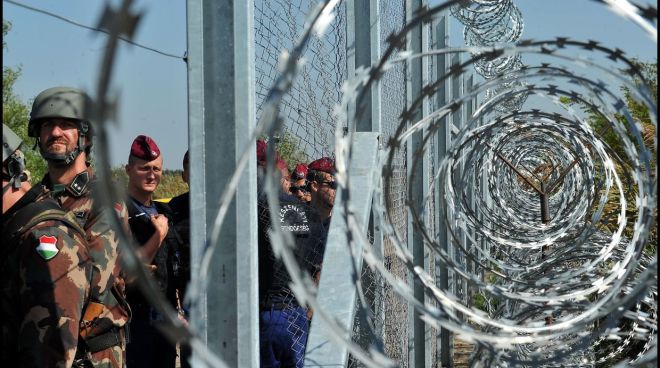
En el 2015, habían 65,3 millones de personas desplazadas forzosamente a nivel mundial, 21,3 millones de refugiados y 10 millones de personas apátridas (fuente: ACNUR).

SERBIA-HUNGARY-REFUGEES-MIGRANTS
AFP PHOTO / ELVIS BARUKCIC vía El Comercio del Perú


A veces, sólo la poesía tiene el poder para conmovernos para que actuemos con compasión. No podemos vivir como si no hubiesen millones de personas en todo el mundo que han perdido familia, amigos y hogares. La poesía de W.H. Auden a mí me tocó y por eso la quise compartir acá.


Blues de los refugiados – W.H. Auden, marzo 1939


Digamos que en esta ciudad viven unos diez millones,

Unos habitan agujeros, otros habitan mansiones.

Pero no hay un lugar para nosotros, mi amor, no hay un lugar para nosotros.


Alguna vez tuvimos un país y nos gustaba

Todavía lo podemos encontrar en un atlas.

Pero ahora, no podemos ir allá, mi amor ahora no podemos ir allá.


En la parroquia de nuestro pueblo crece un árbol viejo

Que cada primavera florece de nuevo.

Pero los viejos pasaportes no florecen de nuevo, mi amor, los viejos pasaportes no florecen de nuevo.


El cónsul azotó la mesa con prepotente gesto:

“Si no tienen pasaportes, “oficialmente” están muertos.

Pero seguimos vivos, mi amor, seguimos vivos.


Fui a un comité, me ofrecieron asiento y me escucharon

Y cortésmente me pidieron que volviera el próximo año.

¿Pero qué vamos a hacer hoy mismo, mi amor, qué vamos a hacer hoy mismo?


Fui a oír a los políticos, a un orador que argüía:

“Si los recibimos aquí, nos quitarán nuestro pan de cada día”,

Y hablaba de ti y de mí, mi amor, hablaba de ti y de mí.


Creí que era un relámpago lo que atronaba sobre mí,

Pero era Hitler sobre Europa, diciendo: “Deben morir”,

Y pensaba en nosotros, mi amor, pensaba en nosotros.


Vi un perro que pasaba muy orondo y abrigado,

Vi que una puerta se abría para que pasara un gato,

Pero ellos no eran judíos alemanes, mi amor, ellos no eran judíos alemanes.


Bajé a la orilla del mar y me detuve sobre el muelle

Para ver cómo nadaban en su libertad los peces,

Apenas a unos cuantos metros, mi amor, apenas a unos cuantos metros.


Caminé por el bosque, vi en los árboles a los pájaros

Que no tienen políticos, y cantan a su agrado,

Pero no eran de la raza humana, mi amor, no eran de la raza humana.


Soñé con un edificio que llega hasta el número mil,

Y tenía mil ventanas y sus puertas eran mil,

Y ninguna era para nosotros, mi amor, ninguna era para nosotros.


Me paré en mitad de una explanada cuando la nieve caía,

Diez mil soldados marchaban para abajo y para arriba,

buscándonos a ti y a mí, mi amor, buscándonos.

Refugee Blues

In 2015 there were 65.3 million forcibly displaced people worldwide, 21.3 million refugees and 10 million stateless people (source: UNHCR).

refugees
Photo credit: images.forbes.com

In some cases, only poetry can touch our souls in a way which leads us to compassionate action. We live in a world with constant refugee crises. Let us not live as if millions of people around the world are not suffering due to lost family, friends and homes.


Refugee Blues – W.H. Auden, March 1939


Say this city has ten million souls,

Some are living in mansions, some are living in holes:

Yet there’s no place for us, my dear, yet there’s no place for us.


Once we had a country and we thought it fair,

Look in the atlas and you’ll find it there:

We cannot go there now, my dear, we cannot go there now.


In the village churchyard there grows an old yew,

Every spring it blossoms anew:

Old passports can’t do that, my dear, old passports can’t do that.


The consul banged the table and said,

“If you’ve got no passport you’re officially dead”:

But we are still alive, my dear, but we are still alive.


Went to a committee; they offered me a chair;

Asked me politely to return next year:

But where shall we go to-day, my dear, but where shall we go to-day?


Came to a public meeting; the speaker got up and said;

“If we let them in, they will steal our daily bread”:

He was talking of you and me, my dear, he was talking of you and me.


Thought I heard the thunder rumbling in the sky;

It was Hitler over Europe, saying, “They must die”:

O we were in his mind, my dear, O we were in his mind.


Saw a poodle in a jacket fastened with a pin,

Saw a door opened and a cat let in:

But they weren’t German Jews, my dear, but they weren’t German Jews.


Went down the harbour and stood upon the quay,

Saw the fish swimming as if they were free:

Only ten feet away, my dear, only ten feet away.


Walked through a wood, saw the birds in the trees;

They had no politicians and sang at their ease:

They weren’t the human race, my dear, they weren’t the human race.


Dreamed I saw a building with a thousand floors,

A thousand windows and a thousand doors:

Not one of them was ours, my dear, not one of them was ours.


Stood on a great plain in the falling snow;

Ten thousand soldiers marched to and fro:

Looking for you and me, my dear, looking for you and me.

What will you do now?

This coming August 14th I will celebrate ten years of full-time mission work in Latin America. Almost ten years ago, at age twenty-two, I was met at the airport outside of Caracas, Venezuela by fellow missionaries. I spent that night inside my very first apartment in Latin America. With a suitcase full of clothes, several books, a few things to remind me of friends and family, I began organizing my new life.

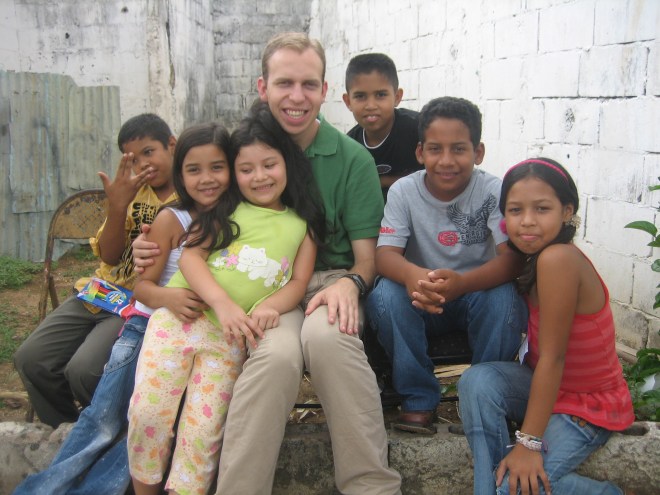
IMG_3071
Anaco, Anzoátegui, Venezuela

So much has happened in the past ten years: I’ve witnessed new births into God’s Kingdom. I’ve helped establish new congregations. I’ve sung at weddings, funerals, and helped expecting parents choose names for their children. I’ve run from armed gunmen and I’ve run into the arms of newfound family and friends. I’ve grown. I’ve cried. I’ve sweat and I’ve suffered.


So now what? People ask me, “What will you do now?” To ask, “What will you do now?” is a haunting question in our postmodern, liquid society. Very few people keep a job for very long anymore and many people move around fairly regularly. We expect new seasons in life to bring about important changes on many levels. So, What is my answer? What am I going to do? I would like to continue doing what I am doing now.

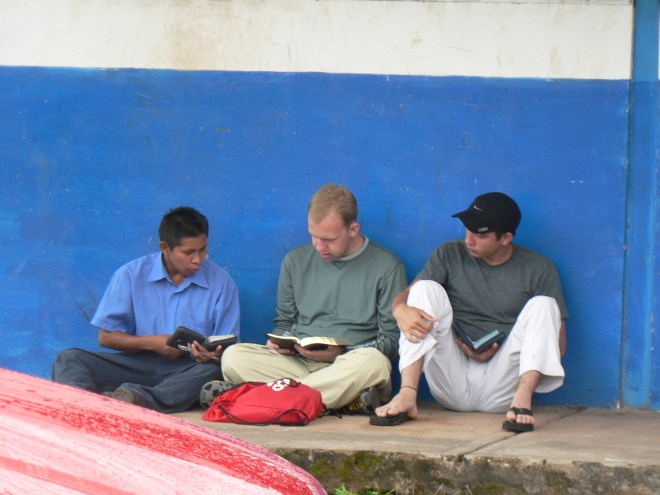
P1040141
Edo. Amazonas, Venezuela

My desire is to spend the coming years in Latin America as a missionary. This is not because I am somehow overly qualified for the job or never face uncertainties about my vocation. I recently discovered the following truth in a conversation with a friend while on furlough. Confession time. Here it is: I need to be a missionary.


Don’t get me wrong. I am not saying that the people of Latin America need me or that somehow the church would feel my absence. Quite the contrary, both friends and family in Latin America would do just fine without me. But I need to be a missionary because I need them – my Latin American friends and family.

IMG_2712
Parque los Chorros, Caracas, Venezuela

You see, mission work isn’t just about teaching – it’s also about learning. It’s not just about helping others, but being helped yourself. It’s about denying yourself certain privileges in order to walk alongside others. It’s about setting aside a part of your self to be transformed into someone different. Mission work changes you.


I would dare say that I’ve learned more about myself in the past ten years than I would have if I would have stayed in white, suburban America. Nevertheless, this self-knowledge would be entirely vain and egocentric were it not understood in light of my experience with the risen Lord.


You see, Latin Americans teach me about Jesus all the time. I’ve learned more about Jesus in dirty urban slums and in the Amazon than I did from a trip to the Holy Land. I come face to face with Jesus whenever I serve or am served by one of the “least of these”.

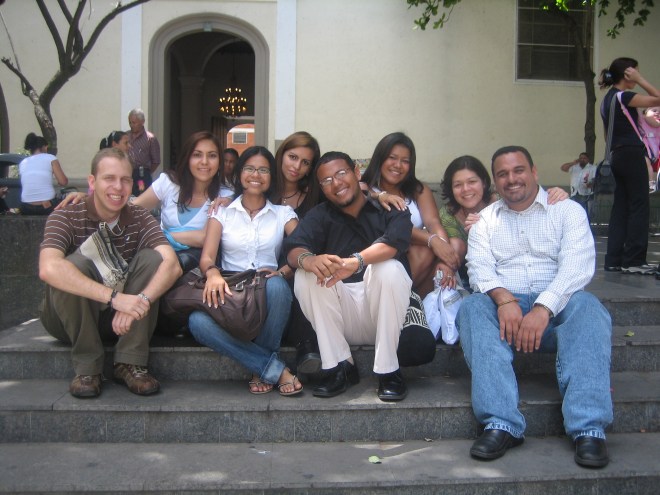
IMG_2917
Plaza Bolívar de Chacao, Miranda (East Caracas)

I don’t want to leave Latin America because there is so much more that I have to learn about Jesus. There is so much more that I have to learn about what it means to walk with Him on the asphalt, the dirt roads and through the high grass. I need to hurt, to struggle, to be alone, to be present, to laugh, to cry with my people because it is this pilgrimage together that teaches me who I truly am. It teaches me where I am going and to whom I am going.


I’m a missionary in Latin America because I need these people.