Love iii / Amor 3 – George Herbert

Love (iii)
George Herbert (1593-1633) 

Love bade me welcome. Yet my soul drew back

                                    Guilty of dust and sin.

But quick-eyed Love, observing me grow slack

                                    From my first entrance in,

Drew nearer to me, sweetly questioning,

                                    If I lacked any thing.

A guest, I answered, worthy to be here:

                                    Love said, You shall be he.

I the unkind, ungrateful? Ah my dear,

                                    I cannot look on thee.

Love took my hand, and smiling did reply,

                                    Who made the eyes but I?

Truth Lord, but I have marred them: let my shame

                                    Go where it doth deserve.

And know you not, says Love, who bore the blame?

                                    My dear, then I will serve.

You must sit down, says Love, and taste my meat:

                                    So I did sit and eat.
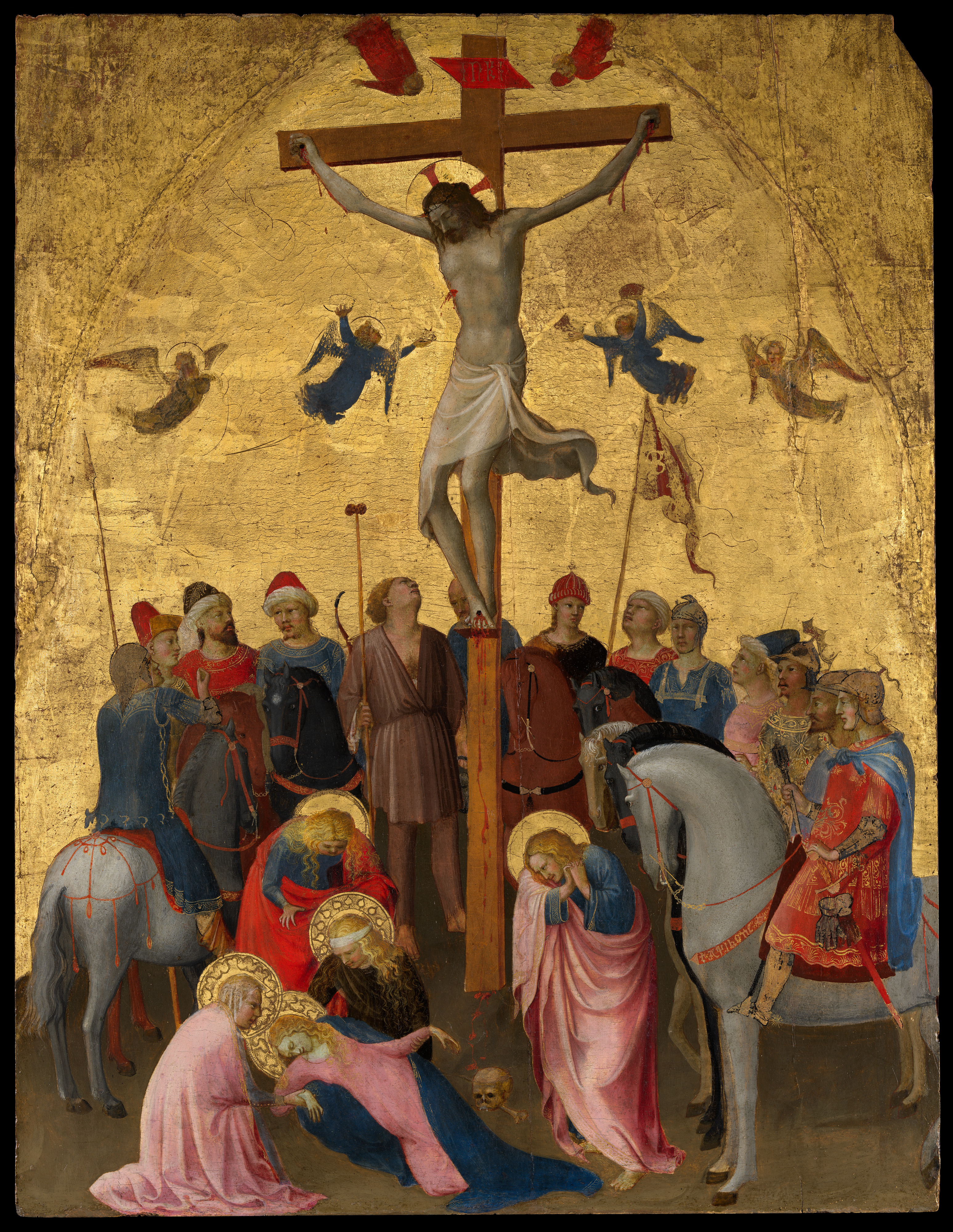
La crocifissione de Fra Angelico, c. 1420-23

Amor (3)
George Herbert

Me llamó Amor; mas vaciló mi alma,

                                    de polvo y de pecado llena. 

Amor, veloz, mi desmayo advirtiendo

                                    desde que entrara yo primero,

Se me acercó, dulcemente inquiriendo 

                                    si alguna cosa me faltaba. 

Un huésped, contesté, digno de ti:

                                    mas dijo Amor, ése eres tú. 

¿Yo, el áspero, el ingrato? Ah, Señor,

                                    yo no puedo mirarte a ti.

Amor tomó mi mano sonriendo:

                                    ¿y quién tus ojos hizo sino yo? 

Cierto, mas los eché a perder: arrastro

                                    en mi deshonra mi castigo. 

¿No sabes, dijo Amor, quién con culpa

                                    cargó? Cuenta, Señor, conmigo. 

Siéntate, dijo Amor, prueba mi carne:

                                    entonces me senté y comí. 

Traducción: Misael Ruiz Albarracín y Santiago Sanz 
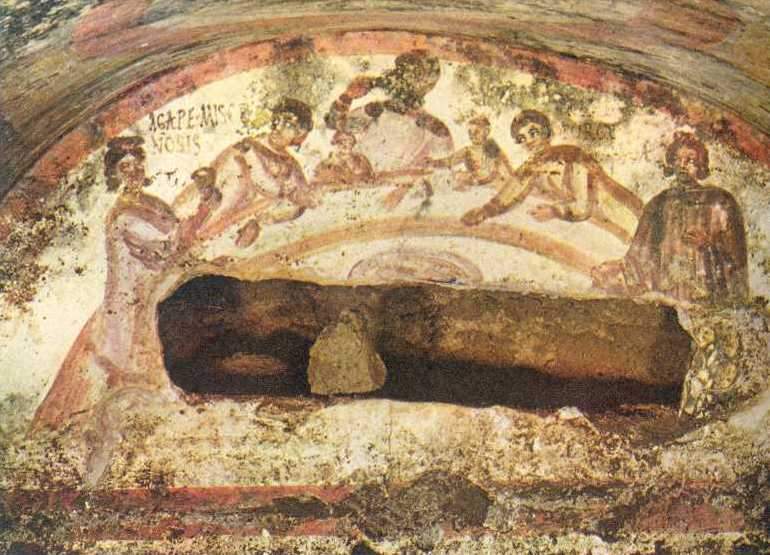
I Too Am an Immigrant

Hospitality is a Christian virtue that changed the world forever. It was one of the virtues that played a major role in the expansion of the early church in the Roman Empire. Pagan culture was anything but hospitable, it was meritocratic (merit based), competitive and utilitarian. It was because the early Christians saw in the other, the stranger, the foreigner the image of God, that the Gospel spread so quickly. Even Christians who were Roman citizens prized their heavenly citizenship more and were led to show compassion and love to those who were displaced by violence and those who relocated looking for a better future. (For a better understanding of hospitality in the first few centuries of the early church, see Destroyer of the Gods: Early Christian Distinctiveness in the Roman World by Larry W. Hurtado.)  

I too have been an immigrant in two different countries. Being an immigrant can be an exciting and terrifying experience. Border controls, at land or at an airport are nerve wracking experiences, even if you have all your documents in order. I have been looked down upon. I have been accused of falsifying documents and impersonating a citizen of my passport country. I have even been accused of working for the CIA. All of this stems from the unavoidable fact that I am different, I am from somewhere else. For the majority of people with whom I live my daily life, I did and still do belong. But for a few fellow humans and greedy officers of the law, I do not belong.

Belonging is one of our deepest desires. The whole Christian Gospel says, “you belong to Me!”. In Christ, we discover God as our Father and fellow believers as our brothers and sisters. We are invited into God’s family. When we question people’s right to belong, when we question their status in the human family, we are attacking their most vulnerable point.  

For Christians, even for those who confuse their earthly citizenship with their heavenly one, all of God’s good green earth belongs to Him! Every piece of land, before humans measured it and sold it to the highest bidder, belongs to God the Creator. Every human being has been created in God’s image. How, then, can we say that humans do not belong on this earth?

God is the Host of all creation. He has generously welcomed us to His world. We, as fellow regents of His creation are also to welcome others. While governments, who do not seek first His Kingdom and His righteousness, may make laws about entry and permanence in a bordered space, as God’s children we know that no human is illegal and that all human beings in every place deserves to be treated with dignity and respect. If we are called to love our enemies, how much more should we care for the vulnerable migrants of our world displaced by violence, failed states and economic terror!

Judeo-Christian ethics are borne out of the nature of God and out of the story of redemption that is being played out still today. Exodus 22:21 says, You shall not wrong or oppress a resident alien, for you were aliens in the land of Egypt. Once again in 23:9, it says, You shall not oppress a resident alien; you know the heart of an alien, for you were aliens in the land of Egypt. In our spiritual DNA there is a past when we were slaves and immigrants in foreign lands. This experience should forever change God’s people and aid us in being loving and compassionate with those who share a part of our story.

(For those who are concerned that these Old Testament passages do not apply to the Christians because they are a part of the Torah, the Law, and not a part of the New Testament, please be advised that Jesus usually radicalized the ethical demands of the Law instead of laxing them. For more information about Christian ethics in the Hebrew Bible, see Old Testament Ethics for the People of God by Christopher J. H. Wright.)

For Jesus, the greatest commands are Love God and Love Others. The second command is not qualified by gender, race, or origin. We are called to love others and to mourn injustices in our world. This life is not a competition to get ahead at the expense of others. (This is pagan religion, not Christianity.) We are called to embody God’s hospitality of all humans on His good earth.

Please, do not celebrate the detention and deportation of immigrants. Do not celebrate family separation at the border or in the country. Do not celebrate the violation of sacred space now that churches are no longer a place of refuge for immigrants. And do not celebrate ICE agents going into schools, place of learning and belonging, in order to terrorize children and families.

What can we do? Lament. We can lament that many countries are too poor to sustain a good quality of life for everyone. We can lament that there are not equal opportunities for all people all around the world. We can lament the broken immigration system. We can lament the exploitation of immigrants in the U.S. and around the world. We can lament the hunger, the violence, and the injustice that forces people to migrate far from home in search for a better life.

We can lament. And we can love. Let’s leave the vitriol, the disdain and the celebration of separated families to the pagans. We’ve got a lot of work to do.

For the Lord your God is God of gods and Lord of lords, the great God, mighty and awesome, who is not partial and takes no bribe, who executes justice for the orphan and the widow, and who loves the strangers, providing them food and clothing. You shall also love the stranger, for you were strangers in the land of Egypt. You shall fear the Lord your God; him you shall serve; to him you shall hold fast; and by his name you shall swear. He is your praise; he is your God who has done for you these great and awesome things that your own eyes have seen. Your ancestors went down to Egypt seventy persons, and now the Lord your God has made you as numerous as the stars in heaven (Deuteronomy 10:17-22).

Love: Our Motivation for Giving

How many people do you know who give to the poor but honestly do not care much for them? How often do we give to good causes without being emotionally involved? Is it possible that we give to the church and to the Lord out of mere obligation instead of  love?

Amy Carmichael, an Irish missionary to India once wrote that “You can give without loving, but you cannot love without giving.”

In our churches, we do not need to teach giving, nor should we teach our obligation to give. We should preach God and his love! If we truly knew God and understood His love, we would be truly transformed by His love.

Once we are touched by the love of God, giving will be our natural response! We will no longer give alms to the poor because of social virtue nor to the church because we know we should. We will love and give because God loves and gives. In our sacrificial giving, we will become like Christ (Ephesians 5:1).

Reflecting God’s Perfect Love

God’s love for us is everlasting. That means that God’s love for us existed before we were born and will exist after we have died. It is an eternal love in which we are embraced. Living a spiritual life calls us to claim that eternal love for ourselves so that we can live our temporal loves – for parents, brothers, sisters, teachers, friends, spouses, and all people who become part of our lives – as reflections or refractions of God’s eternal love. No fathers or mothers can love their children perfectly. No husbands or wives can love each other with unlimited love. There is no human love that is not broken somewhere.

When our broken love is the only love we can have, we are easily thrown into despair, but when we can live our broken love as a partial reflection of God’s perfect, unconditional love, we can forgive one another our limitations and enjoy together the love we have to offer.

Henri Nouwen.